
MAHISHASURMARDINI JAAP TO BE CHANTED FOR 11 DAYS (TILL 6TH JULY)
 Blood donation is a unique donation.
Aniruddha Upasana trust has arranged Annual Mega Blood Donation Camp on Sunday 12th April 2009 from 9AM to 6PM at IES New English High School, Govt Colony, Bandra(E), Mumbai.
Remember...... Every month our body generate 5Ltrs Blood. .......Normally person(Age 18to60 /minimum weight 45kg ) can donate 300-350ml of blood once in 3months
......Each time we give blood, We save THREE LIFE.


 A large number of Indian population today lives without adequate clothing.Over four crore students living in mofusil have just one pair of cloths. Unavailability of adequate and durable clothing deprives them of basic education. Illiteracy breeds blind faith and wrong traditions, which in turn perpetuates poverty. The “Charkha Yojana” has been specifically implemented to break this vicious circle of poverty and illiteracy. Thousands of followers of Parampoojya Sadguru Shree Aniruddha Bapu spin the Amber charkhas for making thread. The hanks produced from threads are collected and converted into cloth.


The grass so collected is sent to farmers in the drought stricken areas to feed their cattle. Till date truckloads of grass has been distributed through our Pune centre in Purander taluka. With this novel and noble viewpoint Bapu made this yojana as one of the facets of the 13 point programme.
Under this the Aniruddha Upasna Trust runs many animal shelters in the rural areas where animals in distress are brought to be looked after during the calamitous times. The Trust looks after these animals for absolutely noble cause without charging a single penny from already stressed farmers. All the daily basic needs of these animals viz., food, water, medicine, etc are totally taken care at these camps.

Eco friendly Ganpati Procedure :
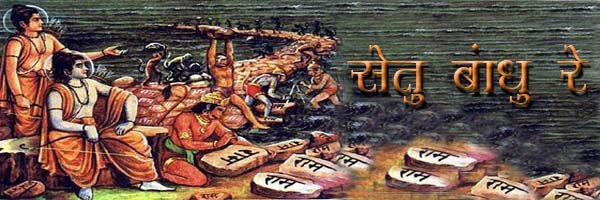
With the grace of P. P. Aniruddha Bapu, Sadguru Shree Aniruddha Upasana Trust has prepared 3500 Eco friendly Ganesha Idols last year. So let’s serve our motherland and save the nature. Paper pulp is made from Ram Naam Books. (Ram Naam Books:-In this book we have to write down the Jap which is mention on the particular page e.g. RAM,SHREE RAM JAI RAM JAI JAI RAM,DATTAGURU,KRISHANA,JAI JAI ANIRUDDHA HARI. After the complication of the book writer have to submit his book to Ram Naam Bank office.All these submitted book papers are use to prepare eco friendly Ganpati) Normal news paper can also be used.
How to make paper pulp:
Remove the water content from the paper pulp. Spread the paper pulp to attain uniformity. Take 250 gms of Gum Arebica in steel utensil. Add 1.25 liters of water. Then keep the utensil on medium heat, boil it for 10-15 minutes. Keep stirring with the help of wooden stick throughout. Filter the Gum Arebica after it cools down. Take 500gms of the paper pulp. Pour in the filtered gum arebica. Merged it is properly. Then add 2.25 kg of white ink powder. Make this mixture soft and firm as textured dough,
This is how you can prepare eco-friendly ganesha’s idol
12”
15”
18”
24”
30”
4 feet.


Many remote places in India have no electricity even today. Many students from these places have to walk for almost two hours a day one way to reach school. The lack of electricity prevents the students from studying after sunset. Poor families even cannot afford electricity, which is expensive. The candles and matchboxes collected from people will be distributed to these families to enable their children to study during night too. The Sanstha has distributed candles and matchboxes to over many poor and needy families in Ratnagiri, Chiplun, Karjat, Kothimbe, kadv, Kolhapur, amalner and Badlapur.


 idols are washed back to the shore, which is certainly not a pleasantsight to behold.

Ahilya is the personification of the misery of the Indian women; caught between the injustice of society and that of her husband. The Ahilya Sangh has been formed for suitably equipping women with the requisite strength and resolve to counter any exploitation and to face any adversity with fortitude. Under this project, ancient Indian martial arts needed for the self protection of women are taught ‘free of cost’. Besides, all women who have been wronged, or are facing a crisis situation in their lives, receive support from the ‘Ahilya Sangh’
Till date, more than 800 ladies have been trained under the Ahilya Sangh Project. The Ahilya Sangh also undertakes tree plantation projects across Maharashtra. Till date, Thousands of trees have been planted across Maharashtra. The Sangh also takes care of the planted trees.

India is a land of various languages and culture. Unity can be achieved through the medium of language. It is essential for every Indian to study at least one other Indian language besides his mother tongue. This will inculcate a feeling of brotherhood amongst Indians and will promote national integration to make the nation strong.
Classes to learn different Indian languages have been started from June 18,2001. Many volunteers are already studying different Indian languages, apart from their mother tongue which, in the time to come, will become very much helpful part for national integration in its truest sense.


